Quick answer: Comfort eating in the evening usually isn't hunger and it isn't weakness - it's a learned stress habit. After a demanding day, your brain reaches for the quickest comfort it knows, gets a brief lift, and quietly files "evening + sofa = snack" as a routine. Because it's learned, it can be unlearned: eat properly during the day, name what you actually need, put ten minutes between the urge and the kitchen, build a "kitchen's closed" ritual, and protect your sleep.
It's 9pm. Dinner's done, you're not hungry - and you're standing in front of the cupboard anyway. If your evenings quietly revolve around snacks you didn't plan and don't particularly enjoy, you're not greedy and you're not weak-willed. Your nervous system has learned that food is the fastest way to soften the end of a pressured day - and it now runs that routine on autopilot. The reassuring part? What's learned can be unlearned.
One client described it perfectly: she could hold it together through back-to-back calls all day, but the moment the laptop closed, the biscuit tin "started calling". It wasn't about the biscuits. It was the first quiet moment of her day - and eating had become the only way she knew to mark it.
It's also incredibly common. When the Mental Health Foundation surveyed over 4,600 UK adults, 46% said they'd eaten too much or eaten unhealthily because of stress. Nearly half the country knows this loop from the inside.
What's actually happening
A pressured day keeps your body in "go" mode, with stress chemicals like cortisol doing the rounds - and cortisol and appetite are closely linked. In one well-known laboratory study, people who produced more cortisol under stress went on to eat significantly more afterwards. Comfort food then does exactly what it promises: it triggers the brain's reward chemistry and takes the edge off - briefly.
Here's the catch. Your brain is a superb pattern-spotter, and it logs that brief relief. Repeat it a handful of evenings and the sequence becomes what psychologists call a habit: an automatic response triggered by context - the sofa, the screen, the kettle, the time of day - rather than by hunger or even by choice. That's why you can find yourself in the kitchen without remembering deciding to go.
Why willpower fails at 9pm
Most people try to fix evening eating with restraint - and most find that restraint works beautifully until about 9pm. That's not a character flaw; it's arithmetic. By evening you've spent a full day making decisions and holding yourself together, your mental brakes are worn thin, and you're sitting in the exact spot where the habit was learned, surrounded by its cues. White-knuckling the urge fights the wrong end of the problem. The kinder, more effective route is to change the cues and calm the state that drives the urge - so there's less to resist in the first place.
How to stop comfort eating in the evening
None of these involve food rules, calorie counting or willpower heroics. They work because they meet the real needs the snacking was standing in for - comfort, closure and rest.
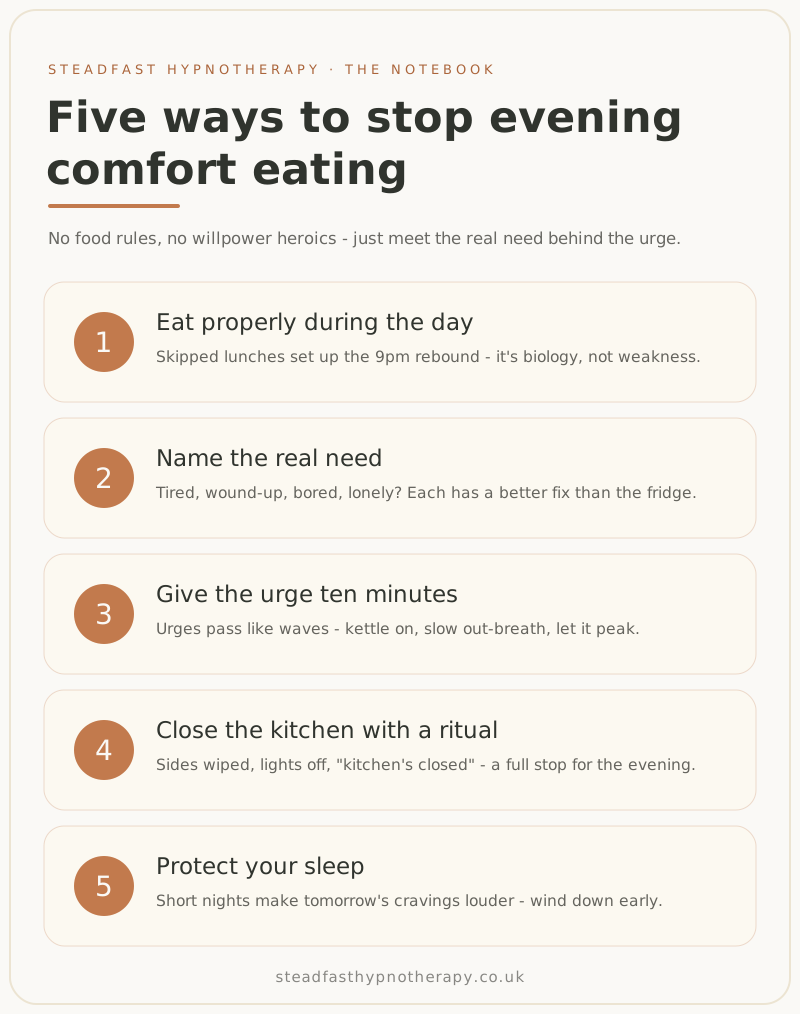
- Eat properly during the day. Skipped lunches and grazed-at desks set up a biological rebound by evening - by 9pm you're running on empty and everything in the cupboard looks reasonable. Regular, satisfying meals earlier in the day quietly remove half the urge before it starts.
- Name the real need. When the pull toward the kitchen arrives, pause and ask: what am I actually? Tired, wound-up, bored, a bit lonely? Each has a better answer than the fridge - rest, a walk around the block, a message to a friend, an early night. You're not denying yourself comfort; you're aiming it better.
- Put ten minutes between the urge and the kitchen. Urges feel permanent but behave like waves - they build, peak and pass. Put the kettle on, make a herbal tea, and give it ten minutes. A few slow breaths with a longer out-breath helps too: slow-paced breathing raises "rest and recover" activity in the nervous system, which takes the urgency out of the urge.
- Close the kitchen with a ritual. Give the evening a clear full stop: sides wiped, lights off, "kitchen's closed". Done consistently, that small sequence becomes its own automatic cue - a habit working for you - and gives your brain the sense of closure it was getting from the snack.
- Protect your sleep. Short nights leave you running on stress chemistry and quick-energy cravings the next day, so tonight's sleep is tomorrow's easiest win against the loop. Step away from bright screens in the last hour - evening screen light suppresses melatonin and pushes your body clock later - and let your wind-down start before the cravings usually do.
The urge isn't really about food. It's about comfort - and comfort can come from more places than the cupboard.
When it's more than a habit
An unplanned biscuit on a hard day is part of being human. But if eating often feels out of control, happens in secret, or comes wrapped in guilt and shame afterwards, please treat that with proper care - talk to your GP, and know that Beat, the UK's eating disorder charity, offers free and confidential support. There's no version of this that deserves judgement - least of all your own.
Can hypnotherapy help with comfort eating?
Comfort eating is stubborn precisely because it's automatic - it lives on the subconscious, stress-driven side of the mind, which is exactly the part willpower struggles to reach. Solution-focused hypnotherapy works there directly. Rather than putting you on rules or picking through every hard day, we ease the wound-up state that drives the urge and mentally rehearse the calmer evening you actually want - so the old "stress, sofa, snack" pattern gradually loses its pull, and the new one starts running on its own. The work is forward-looking, practical, and entirely free of food guilt.
The client with the biscuit tin is a good example. We never once talked about discipline. We worked on how she ended her day - closing the laptop properly, settling her nervous system, giving the evening a different full stop - and within a handful of sessions the tin had mostly lost its voice. As she put it, she didn't stop wanting comfort; she just stopped needing it to come from the kitchen.
If the cupboard-door moment felt familiar, that's a good sign this is exactly the kind of pattern this work helps with.