
Quick answer: You can't switch off after work because a demanding job keeps your nervous system in "go" mode (sympathetic activation), and the stress chemicals that sharpen you by day don't clear the moment you stop. The fix isn't willpower: it's giving your body consistent cues to shift into "rest" mode: a shutdown ritual, a brain dump, slower breathing, and a screen-free wind-down.
You've left the office, or closed the laptop, but your mind hasn't. You're replaying the meeting, drafting tomorrow's to-do list in your head, only half-present at dinner. If you can't switch off after work, it isn't a willpower problem or a personal flaw. It's your nervous system doing exactly what it has learned to do: stay switched on. The reassuring part? What's learned can be retrained - usually faster than you'd expect.
If that rings true, you're in large company. In 2023/24, an estimated 776,000 workers in Great Britain reported work-related stress, depression or anxiety - and for many, that pressure doesn't simply clock off when they do.
What "can't switch off" actually means
Your body has two broad gears: a "go" mode (the sympathetic nervous system) that handles pressure and deadlines, and a "rest" mode (the parasympathetic system) that handles recovery, digestion and sleep. A demanding, always-on job keeps you in "go" for hours at a time. Emails ping like small alarms, your brain treats each one as something to react to, and the stress chemicals that sharpen you by day don't simply vanish at 6pm.
So the racing thoughts, the mental replay, the inability to relax after work - these aren't random. They're the sound of a nervous system that hasn't been given the signal that it's safe to stand down. And the more the mind keeps churning, the longer that physical stress response tends to linger - what researchers call perseverative cognition.
Why "just relax" doesn't work
Telling an activated nervous system to relax is a bit like trying to quiet a car alarm by shouting at it. And after a long day of decisions, deliberate self-control tends to be the first thing to run low - which is exactly when the overthinking wins. You don't need to try harder to relax. You need to give your body the right cues, in the right order.

How to actually switch off after work
None of these are dramatic. They work because they speak your nervous system's language, repetition, signals and a longer out-breath - rather than relying on motivation.
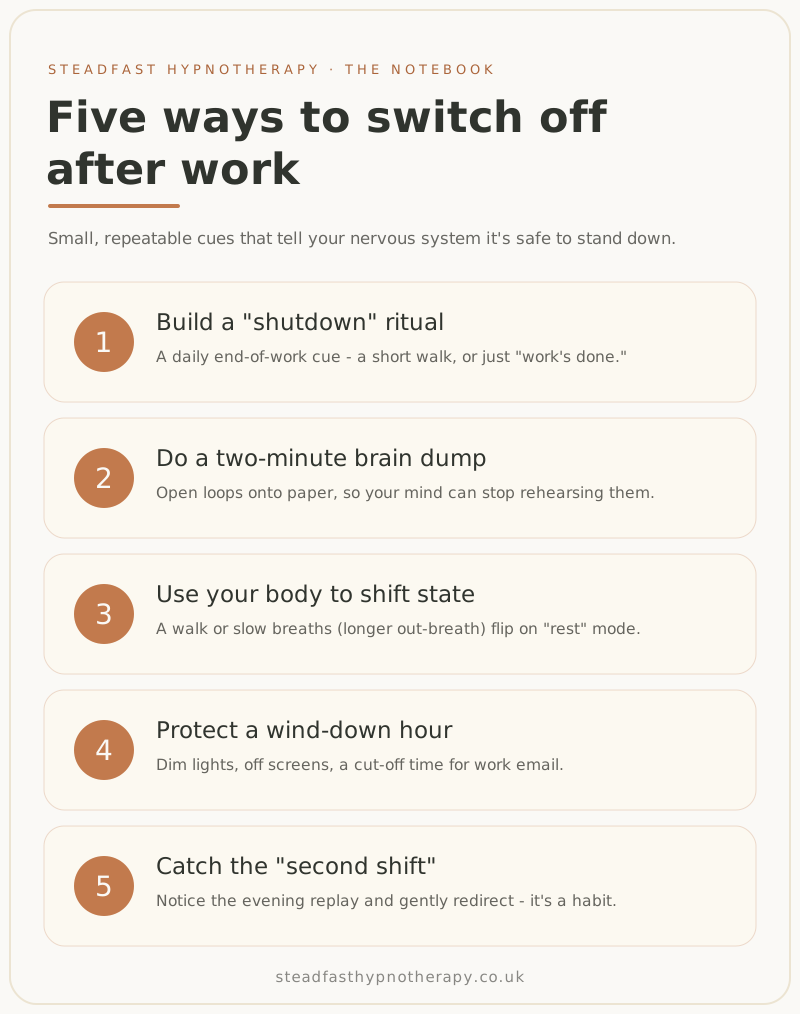
- Build a "shutdown" ritual. Give your brain a consistent end-of-work cue: a short walk, changing out of work clothes, writing tomorrow's top three tasks, or simply saying "work's done." Repeated daily, this becomes a boundary your mind recognises. Deliberately unhooking from work like this - what psychologists call psychological detachment - is one of the strongest predictors of how well you recover in your time off.
- Do a two-minute brain dump. Get the open loops out of your head and onto paper. Your mind keeps rehearsing tasks because it's afraid you'll forget them - writing them down tells it that it can let go. In one study, simply making a concrete plan for unfinished tasks was enough to quiet the intrusive thoughts they'd otherwise cause.
- Use your body to change your state. A brisk ten-minute walk or a few slow breaths with the out-breath longer than the in-breath gently switch on "rest" mode - slow-paced breathing has been shown to raise parasympathetic ("rest and recover") activity. State follows the body faster than it follows logic.
- Protect a wind-down hour. Dim the lights, step away from screens, and set a time after which work email is off-limits. Evening screen light can suppress melatonin and push your body clock later, so this genuinely helps you wind down. You're lowering the input so your system can come down.
- Catch the "second shift." Notice the evening habit of replaying the day, and gently redirect your attention each time. Rumination is a habit, not a fact, and habits loosen with practice.
Switching off isn't about trying harder to relax. It's about teaching your nervous system that it's safe to.
When a busy mind is something more
An occasional wired evening is part of being human. But if the racing thoughts show up most nights, your sleep is suffering, or you carry a low hum of anxiety and dread that doesn't lift on the weekend, that's worth taking seriously. It usually means your baseline has crept into "go" mode and stayed there, and that's a pattern that responds really well to the right support.
How hypnotherapy helps you switch off
Solution-focused hypnotherapy works gently with that stress response. Rather than digging back through everything that's ever gone wrong, we spend our time building the calm, focused state you want more of, so your mind gets plenty of practice settling out of "threat mode". Over a handful of sessions, switching off tends to feel less like a fight and more like the default it's meant to be. The work is forward-looking, practical and paced entirely to you.
If reading this felt a little too familiar, that's a good sign you're exactly the kind of person this work helps.